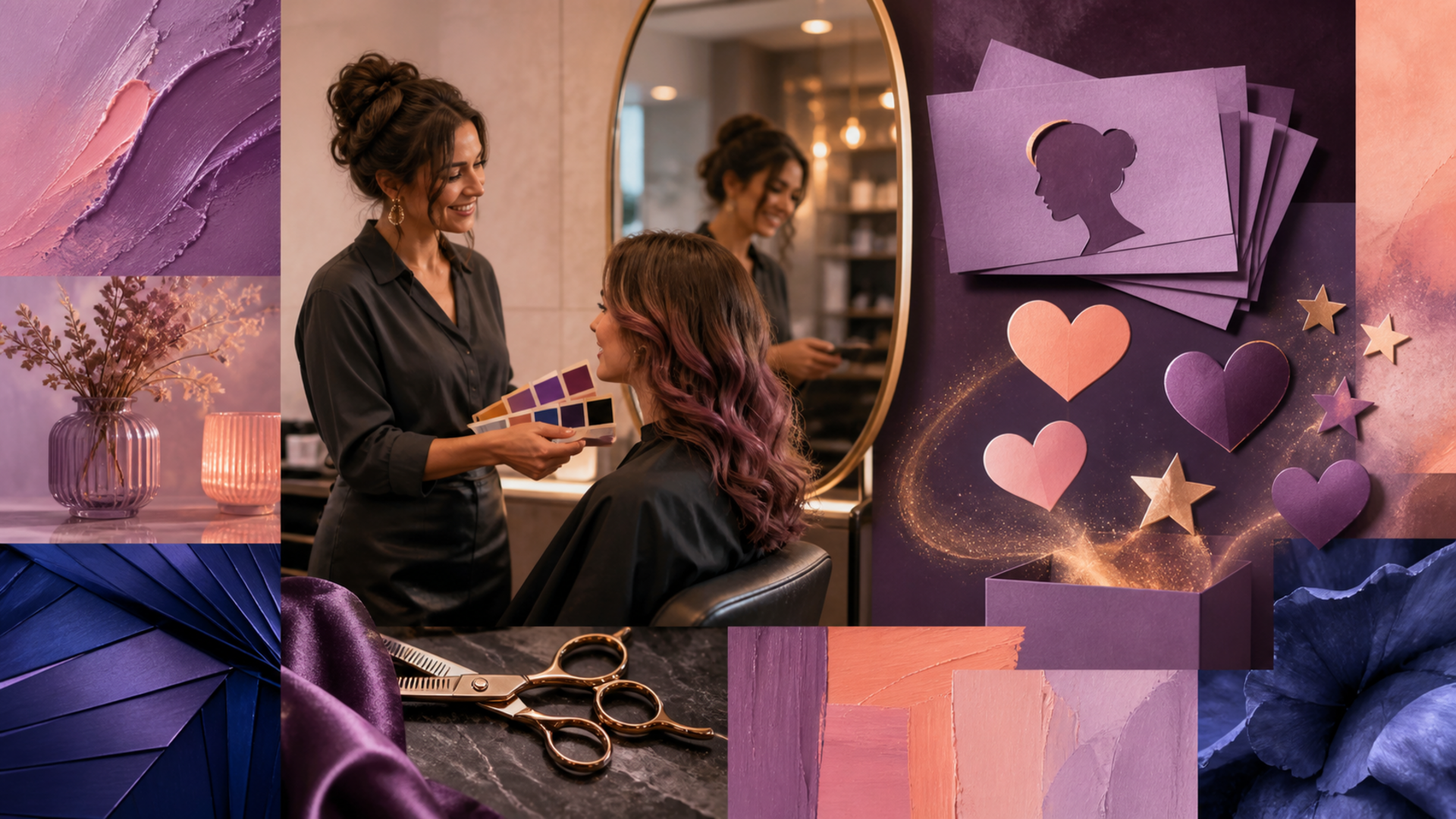
Salon client feedback questions should begin with the consultation, not the goodbye.
Hair, beauty and barbering services are unusually personal.
The client is not only buying an outcome. They are spending time in close interaction with a professional, explaining a preference that may be hard to describe, trusting the provider to interpret it and often watching the result develop gradually.
That makes expectation-setting part of the service.
The National Hair and Beauty Federation recommends a full consultation for new and returning clients and warns against assuming that a regular client automatically wants “the same again”. That principle is useful far beyond technical consultation records.
A repeat customer should still feel asked, heard and understood.
Ask whether the consultation found the real brief
Clients often describe outcomes in subjective language.
“Natural.”
“Not too short.”
“Easy to maintain.”
“Brighter, but not too bright.”
“Something different.”
The professional needs to turn that language into a shared expectation.
Ask about that translation.
1. Did you feel we understood what you wanted before the service started?
2. Was there anything you tried to explain that still felt unclear?
3. Did we ask enough about what you wanted to avoid?
4. Were the likely result and limitations explained realistically?
5. Did you feel comfortable changing your mind during the consultation?
6. If you showed a reference image, did we explain how your result might differ?
These are not technical treatment records.
They are experience questions.
If clients repeatedly say they agreed to something without understanding how it would look or feel, the salon can improve how expectations are confirmed.
Do not let familiarity replace curiosity
Repeat clients can be easier to misunderstand than new clients.
The stylist remembers the previous appointment.
The client assumes the stylist remembers everything.
Both may skip the conversation that would have revealed a changed preference.
Ask returning clients.
7. Did we check whether you wanted anything different this time?
8. Is there something from your previous visit you wanted us to remember?
9. Have your routine, preferences or priorities changed since the last appointment?
10. Did you feel treated as a returning individual rather than a repeat slot?
A salon can create loyalty by remembering useful preferences.
It can lose loyalty by turning memory into assumption.
Ask about comfort while there is still time to change something
One of the most valuable feedback moments happens before the appointment ends.
Clients do not always speak up.
They may not want to offend the stylist. They may assume the professional knows best. They may think the concern is too small to mention. They may wait until the result is finished, when changing direction is harder.
Create permission to say something earlier.
A stylist can ask simple live questions.
“Is the length still feeling right?”
“Is the pressure comfortable?”
“Do you want me to show you where we are before I continue?”
For post-appointment feedback, ask.
11. Was there any point when you wanted to say something but decided not to?
12. What would have made it easier to speak up during the appointment?
13. Did we check in at the right moments?
14. Did any part of the appointment feel rushed?
15. Was there a point where you were waiting without knowing why?
The answers are about communication and comfort.
They should not be used to replace required safety checks, consent procedures or professional judgement.
Separate the finished result from the appointment experience
A client can love one and dislike the other.
Ask separately.
16. How closely did the finished result match what you expected after the consultation?
17. Which part of the result are you happiest with?
18. Was there anything you only noticed once you saw the finished result properly?
19. Did we explain what could be adjusted before you left?
20. Did the appointment experience make you more or less confident about returning?
Avoid forcing the client into one score.
A seven out of ten tells the owner very little.
A comment such as “I loved the colour, but I felt rushed when choosing the tone” gives the salon something it can improve without dismissing the successful result.
Ask again after the result has lived in the real world
Some salon outcomes cannot be judged from the chair.
The client gets home.
They wash their hair.
They try to recreate the styling.
They live with the treatment for a few days.
That can reveal a different type of feedback.
21. What became easier after this appointment?
22. Was anything harder to manage at home than you expected?
23. Did the aftercare explanation match what you actually needed?
24. Was there a product or technique you wish we had demonstrated more clearly?
25. Is there anything you would ask us to do differently next time?
This delayed feedback can improve the next consultation.
It can also reveal where the salon is promising an outcome that is difficult for the client to maintain.
Keep health and safety records out of a general feedback link
Salon services can involve allergy testing, medical history, contraindications and other sensitive information depending on the treatment.
Those are not appropriate subjects for a lightweight anonymous feedback route.
NHBF guidance treats consultations, relevant tests and records as professional and safety matters. Businesses should follow their current insurer, manufacturer, legal and professional requirements.
Feedback can ask whether the client understood the information.
It should not ask them to submit health details anonymously.
For example, “Was it clear why we needed to ask the safety questions before the treatment?” is an experience question.
“Tell us your allergies and medication” is not.
Use the right client record and professional process for information the salon genuinely needs to provide the service safely.
Study the quiet reasons clients do not rebook
A client does not need to complain before leaving.
They can simply disappear.
That makes repeat-visit feedback particularly important.
Ask near the end or after enough time has passed.
26. Did you feel invited to return without feeling pressured to book?
27. Was it clear when you might realistically need the next appointment?
28. Is there anything about booking, availability or timing that makes returning difficult?
29. If you did not rebook, was that mainly because of timing, price, availability, the result or something else?
30. What would make you choose us again rather than try somewhere new?
Do not treat the answer as a retention script.
A client may have a perfectly good reason not to return.
The value is in repeated patterns.
If clients love the service but cannot find suitable appointments, the problem is capacity.
If they feel pushed to rebook, the problem is the closing experience.
If they expected a different result, the problem may begin in consultation.
Recognition should include the invisible details
Salon feedback should also protect what works.
Ask what clients noticed.
31. What did a team member do that made you feel looked after?
32. Which small detail made the appointment feel personal?
33. What do we do that you would notice if it disappeared?
34. What made you trust the recommendation you were given?
35. Which part of the visit feels most worth coming back for?
These answers help the owner see the value that never appears in a treatment code or till report.
Catch what the client did not say in the chair
Salon feedback has a particular timing problem. A client may smile, pay and leave before deciding that one part of the appointment did not feel right. Vibebo gives that unsaid detail somewhere to go once the pressure of the chair has passed.
The salon owner can share a personal message link after the appointment with one focused prompt rather than a long satisfaction form.
The client opens the link in a browser and can respond without creating a Vibebo account, which keeps the invitation closer to a private follow-up than another account or loyalty step.
A strong question is: “Was there any point in today’s appointment when you wanted to say something but held back?” A few days later, a different prompt can ask: “Was anything harder to manage at home than you expected?”
Those questions reach two different moments: what the client could not comfortably say during the service, and what only became obvious after living with the result.
Responses arrive in the link owner’s personal inbox, with hide, delete, flag and block controls available while the owner looks for patterns that should change the next consultation or check-in.
Keep the feedback about the experience. Information the salon needs to provide a treatment safely, such as consultation records, relevant tests or medical details, belongs in the salon’s proper professional process.
A feedback prompt can ask whether safety information was explained clearly without inviting the client to submit medical conditions, allergies or other sensitive health details.
Small salons also make context easy to recognise. A distinctive treatment, stylist or appointment time may make the visit obvious even without a name, so keep the question centred on the experience rather than personal detail.
If two or more named managers genuinely share responsibility for the client experience, a Vibebo Shared Channel can give them one common feedback space with viewer or manager roles. The useful outcome is not a report for its own sake. It is a better next appointment: clearer consultation language, a deliberate mid-service check-in, simpler aftercare or a less pressured rebooking conversation.
Build feedback into the next consultation
The strongest salon feedback loop does not end with a report.
It improves the next appointment.
If clients say they are not sure how much length will be removed, change the consultation language.
If they say they hesitate to speak mid-service, add a deliberate check-in.
If aftercare is hard to remember, simplify it.
If repeat clients feel taken for granted, restore curiosity at the start of every appointment.
If booking is the barrier, solve the booking barrier rather than offering another loyalty incentive.
Salon client feedback questions are useful because loyalty is rarely one dramatic event. It is the accumulation of small moments where the client feels understood, comfortable and confident about what happens next. Ask about those moments, then make the next visit easier to trust.