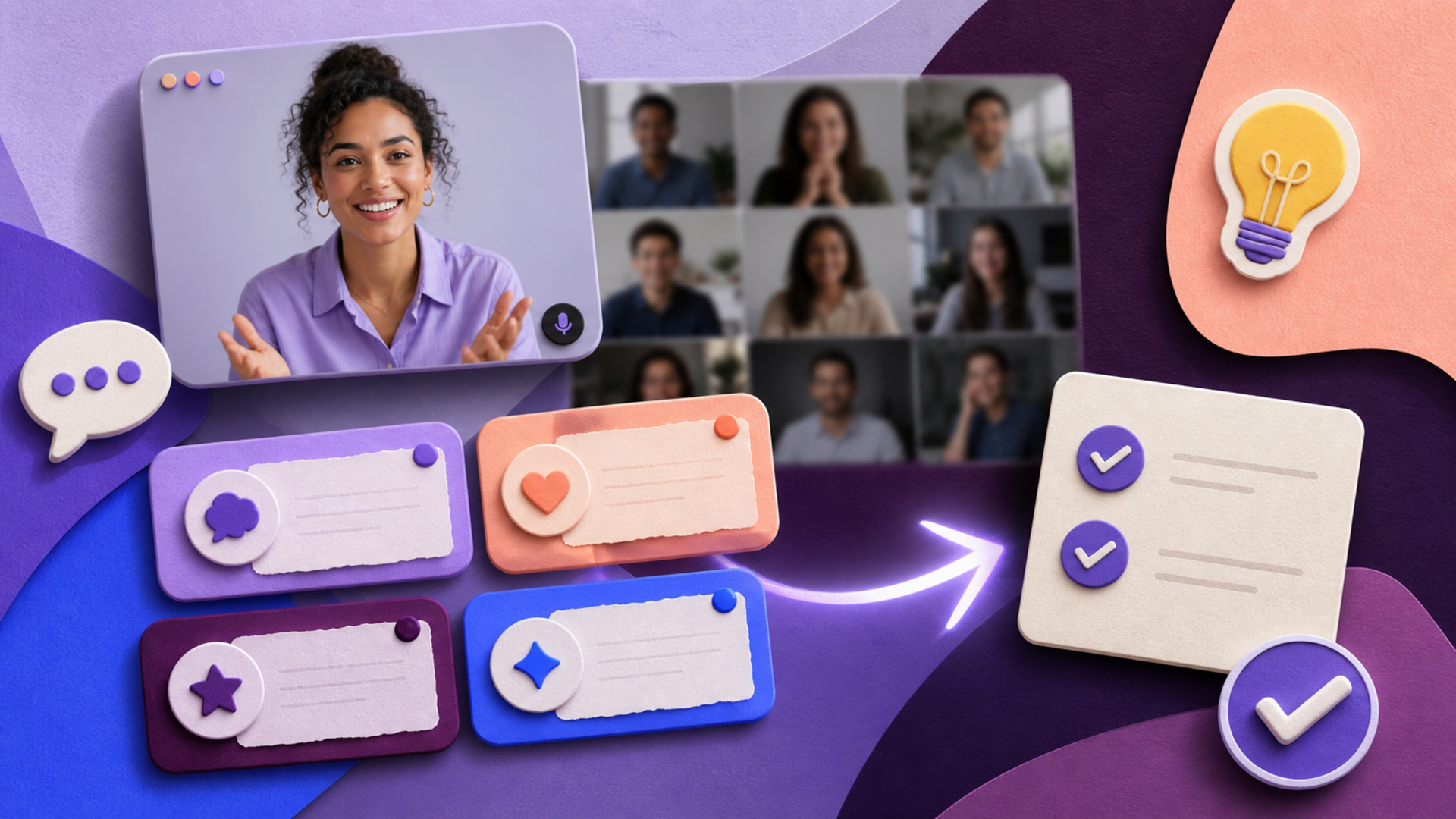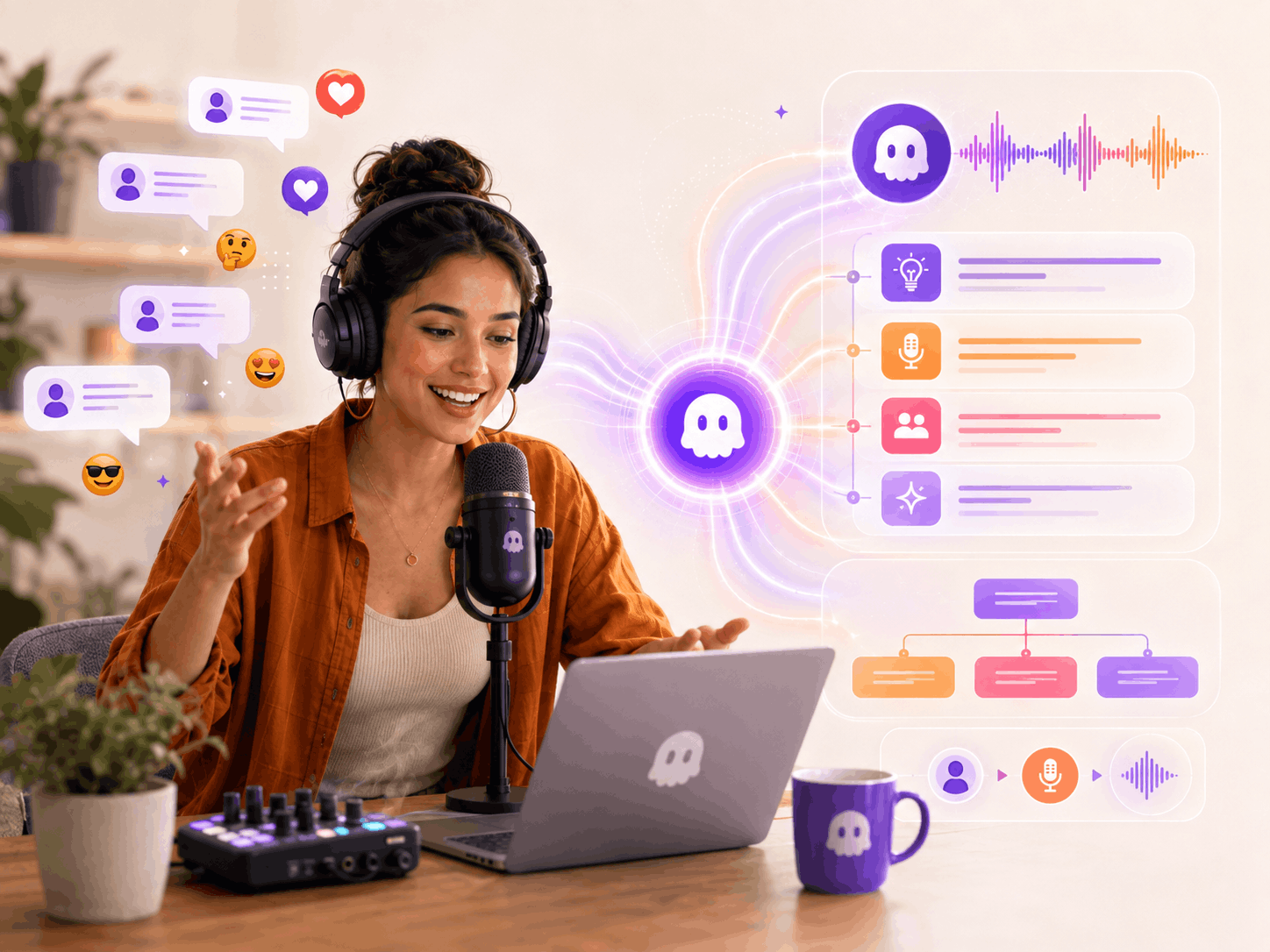
Sometimes the question somebody wants to ask is not the question they are willing to ask publicly.
They may be sitting in a company meeting wondering whether anyone else is concerned about a decision.
They may be watching a creator and have a question they do not want attached to their public profile.
They may have honest feedback for a community leader, podcast host or small business but would rather not introduce themselves before giving it.
That is why people continue to search for ways to ask anonymous questions.
The basic idea is simple. Give somebody a route to submit a question without requiring their public identity to become part of the conversation.
The useful part is deciding what should happen after that question arrives.
Some anonymous question tools are designed for a live room.
Others are built around social media.
A newer group is beginning to treat anonymous questions as ongoing audience feedback rather than a temporary interaction.
Understanding those differences can help you choose the right approach and collect much better responses.
First decide what you actually want to hear
Before choosing an anonymous question platform, decide what you want people to tell you.
This sounds obvious, but it changes everything.
There is a large difference between saying
Ask me anything
and saying
What is one thing about starting a business that nobody explained properly to you?
The first invitation creates an open social interaction.
The second creates useful research.
Neither is automatically better.
The right choice depends on what you want to do with the answers.
A creator may want ideas for future videos.
A podcast host may want questions for an upcoming guest.
A manager may want questions before a company meeting.
A community organiser may want to discover concerns that members are reluctant to raise publicly.
A business owner may want feedback about an experience.
Anonymous questions work best when the invitation gives people enough direction without telling them what answer you expect.
Live anonymous questions work differently
Slido is a good example of the live approach.
Its Q and A system allows participants to submit questions during meetings and events. Questions can be submitted anonymously, and other participants can vote for the questions they also want answered. Hosts can moderate questions before making them visible.
That model makes sense when everybody is gathered around the same moment.
A presentation is happening.
A speaker is on stage.
A company meeting has started.
A lecturer is teaching.
Questions need to move towards an answer while that session is still relevant.
The voting element is especially useful when hundreds of people could potentially ask the same thing in different words.
Instead of the host choosing which question matters most, the audience can help surface it.
This is anonymous participation as part of an event.
It is structured, immediate and closely connected to what is happening in the room.
Social anonymous questions have a different purpose

NGL approaches anonymous questions from almost the opposite direction.
Its public experience is built around prompts such as asking somebody anything, sending confessions, sharing opinions and answering playful personal questions. Its system lets a user generate a link, share it through social media and receive messages from people who open that link. The recipient can then share selected messages and responses back to social media.
There does not need to be a meeting.
There does not need to be a presentation.
The link itself becomes the invitation.
That makes the interaction feel much closer to Instagram, TikTok, Snapchat and other social spaces.
Someone sees the link.
They tap it.
They send something.
The recipient decides whether the message is interesting enough to respond to publicly.
This is why tools like NGL can feel very different from event software even though both allow people to ask anonymous questions.
The mechanism overlaps.
The context does not.
There is a large space between those two experiences

Most audiences do not exist only during meetings.
They also do not necessarily want every anonymous interaction to be a confession or social game.
A YouTube creator may want genuine questions from viewers between uploads.
A podcast may want listener questions throughout the month rather than only while recording live.
A community may want an always available place for feedback.
A small team may need a shared inbox rather than a public question board.
A business owner may want a simple link that customers can use without joining another platform.
This creates a middle ground between event Q and A and casual social messaging.
That middle ground is becoming increasingly useful because audience engagement is no longer confined to one platform or one moment.
An anonymous question link can become a listening channel

One way to think about an anonymous question link is as a permanent listening point.
You create the destination once.
Then you change the invitation around it.
This week you might ask
What should I cover in my next video?
Next week
What part of this topic still does not make sense?
Before a podcast interview
What would you ask my next guest if you could ask anything?
After publishing something
What did I leave unanswered?
The destination can stay the same while the purpose changes.
That is quite different from creating a new survey every time you want feedback.
It also differs from a live question room that exists mainly around one event.
The link becomes part of your normal audience relationship.
This is where Vibebo takes a different approach
Vibebo uses the familiar anonymous link model but extends the workflow beyond receiving the message.
A personal Vibebo destination can receive anonymous questions or feedback without requiring the sender to create an account. Received messages enter a private inbox rather than becoming public automatically. The recipient decides what happens next.
That distinction matters.
When somebody sends something anonymously, they may be more willing to speak because they are not stepping directly onto a public stage.
The recipient can review the message privately first.
They can leave it there.
They can manage it.
They can use it as feedback.
Or they can choose to create a public response where that option is appropriate.
Vibebo also provides Channels for shared feedback destinations where more than one person needs to review incoming messages. Channels can use public or private access depending on the purpose.
This makes the underlying anonymous link useful beyond purely personal social questions.
Good anonymous questions need good prompts
People often blame poor responses on the audience when the real problem is the invitation.
If you ask
Any questions?
you are asking the respondent to do too much work.
They must decide what subject you mean.
They must decide how serious the response should be.
They must work out whether criticism is welcome.
They may not know what you plan to do with what they send.
A better prompt removes some of that uncertainty.
For creators, try questions such as
What is something you want me to explain properly?
What question have you wanted to ask but never found the right video for?
What should I investigate before making my next episode?
What did I miss in my last video?
For communities, try
What should we be talking about that we are currently ignoring?
What is making participation harder than it needs to be?
What would you change first?
For teams, try
What question should leadership answer at the next meeting?
What part of this project still feels unclear?
What problem are we treating as normal that should probably be fixed?
The point is not to force a specific answer.
It is to give the sender a useful starting point.
Anonymous does not have to mean unstructured

There is a common assumption that anonymous messages must be chaotic.
They do not.
You can use a simple anonymous link while still creating structure around the conversation.
The prompt provides the first layer.
The destination provides another.
Moderation provides another.
What happens after the message arrives provides the final layer.
Slido uses voting and host moderation to organise live questions.
Vibebo keeps incoming anonymous messages private first and gives recipients management and moderation controls before they decide whether anything should move into a public conversation.
Different environments need different kinds of structure.
The important question is whether the structure helps people speak rather than making participation feel like filling out paperwork.
Make participation easy

Every extra requirement can reduce the chance that someone responds.
If the purpose is to collect a quick anonymous question, asking someone to create an account first introduces unnecessary friction.
This is one reason social link tools became popular.
The person already has enough motivation to tap.
Do not make them complete another onboarding process before they can speak.
For ongoing audience feedback, the ideal path is usually straightforward.
See the invitation.
Open the link.
Understand what is being asked.
Write the message.
Send it.
Done.
The recipient can deal with the complexity on their side.
The sender should not have to.
Give people a reason to trust the anonymous option
If you invite anonymous questions, be precise about what anonymous means within the product you choose.
Do not casually promise more privacy than the technology provides.
Slido states that hosts cannot identify participants from anonymous questions or anonymous poll responses.
NGL states that it does not store the sender’s name or social media handles in a way that allows those details to be revealed to the recipient.
Vibebo keeps the sender anonymous to the recipient while retaining limited internal signals where needed for safety controls, blocking and abuse prevention.
Those details matter.
People should understand the privacy model rather than assuming every service uses the word anonymous in exactly the same way.
Plan for moderation before asking the question

Anonymity can make honesty easier.
It can also reduce the social consequences that normally discourage someone from sending abuse.
If you are going to invite anonymous responses publicly, moderation should be part of the setup rather than something you think about after the inbox becomes difficult.
Vibebo includes AI Sentinel and Message Filtering to help classify categories of incoming messages that may be spam, harmful or sexually suggestive. It also provides Hidden Words, sender blocking, reporting and link pausing.
Slido offers moderation controls that let hosts review submitted questions before they become visible to the wider audience.
The exact tools matter less than the principle.
The recipient should retain control.
Anonymous participation should make it easier to speak.
It should not require somebody to surrender control of their own space.
Do not make every anonymous question public
This is particularly important for creators.
Receiving a message anonymously does not automatically mean the sender wanted their exact words displayed to thousands of people.
Sometimes the useful part is the question itself.
Sometimes the better decision is to answer the wider issue without displaying the original submission.
Sometimes the message should stay private completely.
Vibebo takes a private first approach. Anonymous messages enter the relevant inbox or Channel, and the recipient decides whether a selected message should become part of a public response.
That separation creates room for judgement.
Before making anything public, remove personal information, sensitive context or details that could unnecessarily identify someone.
The fact that a message inspires content does not mean every detail belongs in the content.
Anonymous questions can become content research

For creators, this is where anonymous questions become more interesting.
A viewer question is not merely something to answer.
It is evidence of curiosity.
If several people ask variations of the same thing, you may have discovered a content theme.
Imagine a creator receives these messages.
How much does it really cost to start?
What did you spend before earning anything?
Could somebody do this with £500?
What expenses surprised you?
Those are four separate questions.
They also point towards one larger subject.
The real cost of getting started.
That could become a TikTok.
It could become a YouTube video.
It could become a podcast discussion.
It could become a detailed article.
The inbox is now doing more than creating engagement.
It is helping shape the editorial calendar.
Use anonymous questions alongside search data

Creators should not choose between audience feedback and search research.
They answer different questions.
Search data can show what a wider market is looking for.
Anonymous audience feedback can show what your particular audience wants to ask you.
Suppose search data shows rising interest in moving to Northern Ireland.
That tells you the broad subject has demand.
Your anonymous inbox might reveal the questions underneath it.
Is finding somewhere to rent difficult?
Can I live outside Belfast without a car?
How easy is it to meet people?
What surprised you after moving?
Those questions give the broad search topic human detail.
The strongest content strategy can combine both signals.
Find demand.
Listen to your audience.
Then decide what you are genuinely qualified to answer.
AI can shorten the distance between feedback and a draft

Another emerging shift is what happens after audience feedback has been collected.
Traditionally, a creator would receive a message in one application, copy it somewhere else, open an AI writing tool, explain the context again and then ask for an outline.
Vibebo Studio is designed to reduce that movement.
Creators can select feedback inside the product, choose a drafting intent, provide additional direction and develop a working draft from the conversation. Public Vibebo AI features also include Podcast and Press experiences for developing feedback into creator work.
This does not make the audience question automatically correct.
It does not make the generated draft ready to publish.
The creator still needs research, judgement, editing and their own perspective.
But it changes where the creative process begins.
Instead of asking AI to invent what the audience might care about, the creator can start with something a real person actually sent.
Anonymous questions can continue after the event

This is perhaps the clearest difference between an ongoing feedback destination and traditional live Q and A.
A live event has an obvious ending.
An audience relationship often does not.
Your YouTube subscribers remain after the upload ends.
Podcast listeners may hear an episode three weeks after publication.
A community conversation may continue for months.
A customer may think of useful feedback long after leaving the business.
An always available anonymous question link gives those people somewhere to put that thought when it occurs.
That does not make live tools obsolete.
It simply solves a different problem.
When Slido makes more sense
Choose a live Q and A tool such as Slido when the question is closely tied to a presentation, meeting, lesson or event.
Its strengths are obvious in that environment.
Participants can submit while the discussion is happening.
The audience can surface popular questions.
Hosts can moderate.
The speaker can answer while everyone is still present.
If your goal is to run an organised question session for a room full of people, that structure is valuable.
When NGL makes more sense
NGL fits naturally when the interaction itself is the content.
Its public positioning centres on confessions, personal questions, opinions and social prompts.
If you want friends or followers to send spontaneous anonymous messages that you can respond to through social media, that model is deliberately simple.
There is very little ceremony around the interaction.
That is part of the appeal.
When an ongoing feedback platform makes more sense
A platform such as Vibebo becomes more relevant when you want the anonymous link to serve a continuing purpose.
You may want questions today and feedback tomorrow.
You may want to keep some responses private.
You may want a team to review them.
You may want aggregate audience signals.
You may want useful messages to become the starting point for creator work.
You may occasionally want to publish a selected question with a response through Pulse while leaving everything else private.
This is less about running one anonymous Q and A session.
It is closer to maintaining an audience listening channel.
The best anonymous question tool depends on what happens next
When people search for somewhere to ask anonymous questions, it is tempting to compare platforms only by the submission form.
Can someone type anonymously?
Can they press send?
Can I receive it?
Those questions matter, but almost every serious anonymous question tool has some version of that flow.
The bigger differences appear afterwards.
Can the audience vote?
Can the question remain private?
Can several people manage the inbox?
Can you moderate before publication?
Can you collect questions outside a scheduled event?
Can you use the responses as research?
Can useful feedback become something you act on?
That is where the products start solving different problems.
Ask better questions and you will hear better things
Anonymous technology cannot make a vague question interesting.
It cannot make an audience care.
It cannot replace trust.
It simply changes the conditions around speaking.
If you want to ask anonymous questions and receive something genuinely useful, begin with the invitation.
Make the purpose clear.
Remove unnecessary friction.
Choose a platform that fits the situation.
Give people sensible privacy expectations.
Moderate responsibly.
Then do something worthwhile with what people tell you.
For some situations, that means answering the highest voted question during a live event.
For others, it means posting a funny anonymous response to social media.
For creators, teams and communities, it may mean something more continuous.
Listen today.
Find the question that matters.
Act on it.
Then give people somewhere to speak again.
That is when anonymous questions stop being a novelty and start becoming a useful part of how you understand an audience.